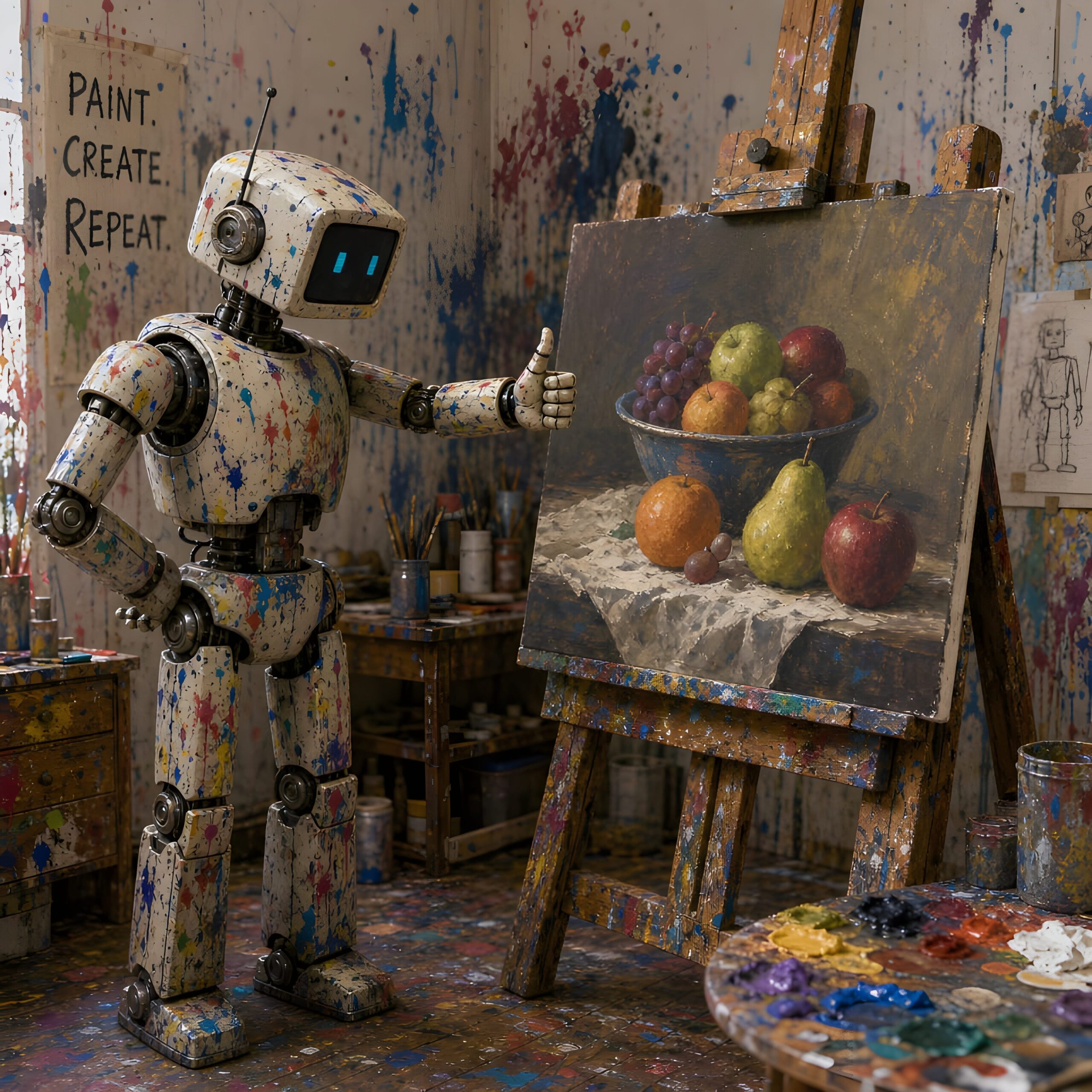
But Your Closed Mind Might Be
Unpopular opinion? Every generation has a boogeyman.
Rock and roll was going to corrupt the youth.
Video games were going to rot our brains.
The internet was going to destroy civilization.
And now? Artificial Intelligence has become the newest punching bag. How convenient?
What fascinates me isn’t that people are skeptical. Skepticism is healthy. What fascinates me is how many people have already decided AI is evil without ever taking the time to understand it. Lord, is our species in trouble!
I would be genuinely curious to know how many of the loudest AI critics watch football, drive cars, fly on airplanes, scroll social media, stream movies, play video games, or rely on GPS to get them everywhere they go. Everything we do has an impact on the world.
Everything.
Yet somehow, AI has become the scapegoat because it is much easier than taking the time to understand the value.
The irony is that most of us have been using forms of artificial intelligence for decades. GPS navigation, recommendation algorithms, voice assistants, predictive text, fraud detection, search engines—we’ve been quietly benefiting from AI long before ChatGPT arrived at the party.
The difference now is that the technology has become visible. And visibility makes people uncomfortable.
AI Didn’t Make Me Less Creative
It Made Me More Creative.
I’m an artist! A poet. A producer. An educator. A performer.
And AI has not replaced any of those things. It has amplified them.
The songs I’ve created with AI collaboration have received some of the strongest feedback of my creative life. I made a birthday anthem for my best friend Stacy that made us both cry multiple times.
The educational programs I’ve developed with AI assistance are more polished than I ever could have imagined. I’m talking about personalized trivia games, Torah yoga, Jewish Jenga, and so much more!
No, I’m not “stealing other people’s art”! I am putting my own photography and logo and branded imagery in, letting it work it’s AI mash up magic, and coming out with more fantastic fliers and PR material than I ever dreamed of. Would I have paid another graphic desiger to do any of this? NO! I would have done it myself, and it would have looked half assed, because I’m not getting paid for most of the art I produce anyway.
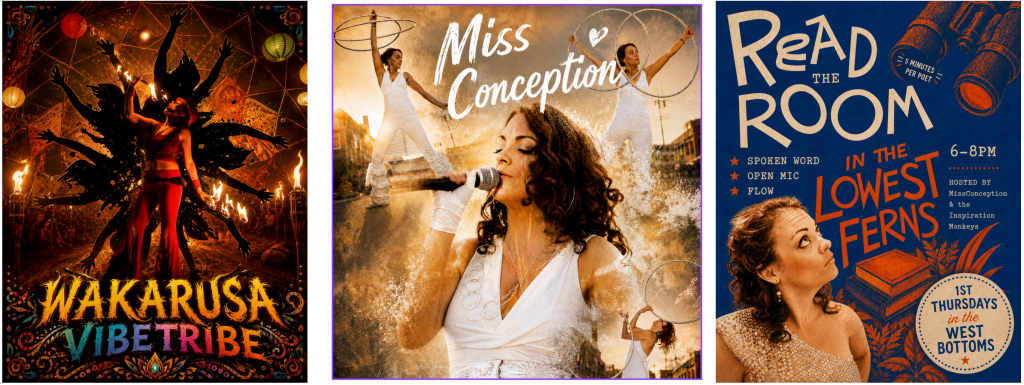
Projects I have had sitting in my parking lot for 10 years are finally getting handeled and out the door. (Check out this children’s book I wrote, based on a true story about my vegetarian grandmother getting caught eating lambchops, that I never thought I’d be able to get to!
The grants, lesson plans, workshop outlines, marketing materials, event concepts, and research projects I create are more organized and comprehensive than ever before.
True story: One grant I applied for was turned down, and when I asked for feedback as to why I did not receive the funding, I was told that my application was SO polished, SO professional, and SO good, that it was lightyears ahead of everyone else who submitted, and they did not think that I was a real person who had applied. (First world problems!). I’ll call it a win, and a learning curve.
The emails I have sent to parents and target audiences have received “wow factor” feedback, with people gushing to ask “how did you write that?” and telling me “well done!”. For example, one of our students wasn’t following the dress code, which was proving to be ‘distracting’ in a professional school environment. After multiple attempts to call the student in, it was clear I needed to send an email to the parents and get clear on our policy.
I spent a bunch of time researching how other faith-based organizations word this delicate predicament, again and again only to find useless verbiage stating “it is a case-by-case scenario”, and that it’s” up to each community to determine the best guidelines to uphold”.
Finally I turned to AI to “write me an email to middle school parents about proper dress code for a reform synagouge” and I get more compliments on my classy email about classroom etiquette. The middle schoolers still need cat herding, but at least it is clear on our end what is expected.
Not because the machine did the work. Because I did. Yes, the machine helped. (The robots can be your friends, too!). But my brain was still involved. You can’t check out. This distinction matters.
A paintbrush doesn’t make someone a great painter.
A camera doesn’t make someone a photographer.
A typewriter doesn’t make someone a published writer.
And ChatGPT doesn’t make someone more creative.
Creativity still comes from people.
Ideas still come from people.
Vision still comes from within.
The soul is still human.
So, when you hear that something is affiliated with AI, do you automatically stop listening and discredit the source? If so, you might be missing the point.
The Real Problem Isn’t AI
It’s Lazy Humans.
I hear people say: “AI is producing garbage,” and sometimes that’s true, but that is what humans do! Garbage in, garbage out. The only reason there IS garbage within AI is because a HUMAM put it there.
If you feed AI thoughtless prompts, you’ll get thoughtless results. If you don’t fact-check, edit, revise, question, or contribute your own intelligence, you’ll create mediocre work.
The problem isn’t artificial intelligence. The problem is people outsourcing their intelligence.
I use AI every day. And I spend just as much time correcting it, refining it, challenging it, and collaborating with it as I do accepting its suggestions.
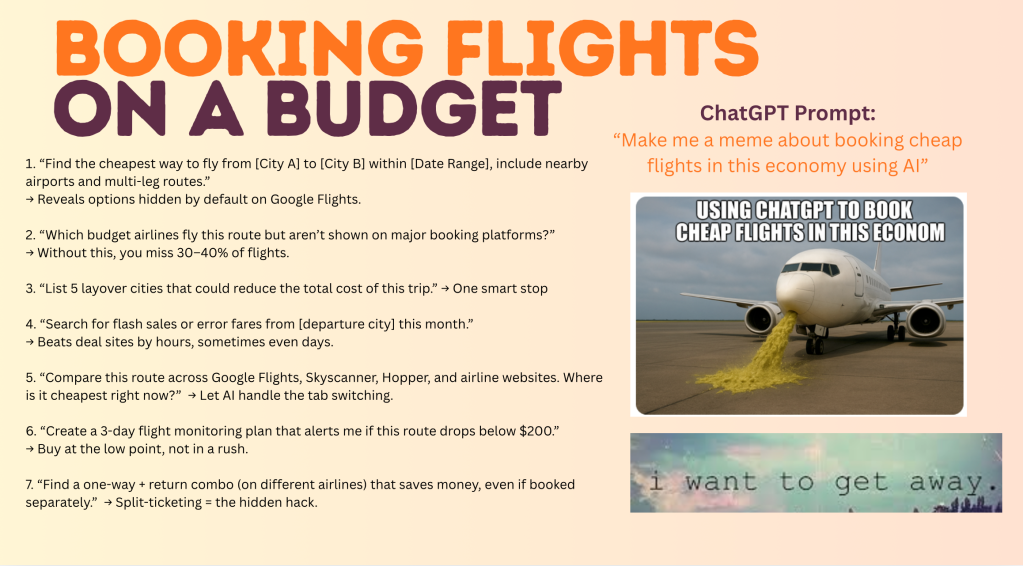
AI is not an oracle. It’s not a replacement for critical thinking. It’s not a doctor, and it’s not your therapist. It’s a brainstorming partner. A research assistant. A creative collaborator. It can facilitate a conversation with your doctor to ensure that you are getting proper medical answers and attention that you deserve. It can help you book flights and find the best pricing with the most direct route, cutting out all the bullshit (no advertisements in AI researching!)
It is a mirror that often reflects the quality of what you bring to it. So take a look at that reflection folks, and if you don’t like what you see, then maybe it’s time to get back to the gym.
“OY! It’s Taking Our Jobs”
So let’s talk about that elephant in the room.
People often say, “AI is taking our jobs.” Quite the contrary, actually. (You were going to lose your job you didn’t want to work anyway!)
What’s happening is that people who understand how to use AI effectively are becoming more productive than people who refuse to learn it. That is who is taking your job. Someone who knows how to work with the robots.
The same thing happened with computers.
The internet.
Social media.
Digital design tools.
Technology changes the job market. That is nothing new.
The question isn’t whether AI has a purpose. The question is whether we’re willing to learn how to use it responsibly. Because the longer we refuse to engage with it, the harder it will become to catch up. And you didn’t miss the boat yet, there is still time for you, but you have to do. your homework, and not remain passively critical. You’re biting yourself in the ass.
The Ethics Still Matter
This is where the conversation gets interesting.
Because I don’t believe every use of AI is ethical. Far from it.
- We should be discussing:
- Transparency.
- Privacy.
- Bias.
- Misinformation.
- Deepfakes.
- Plagiarism.
- Consent.
- Environmental impact.
Those conversations are important. In my workshops and talks about using this new technology, I talk extensively about ethical AI use, especially when it comes to talking to our children about it (because just like with sex and drugs, if you DON’T teach them, they are going to learn about it somewhere. How much do you want to control that narrative?”
Fact-check everything.
Protect your private information.
Don’t use AI to cheat.
Don’t use AI to impersonate people.
Don’t use AI to spread misinformation.
Don’t use AI to replace your humanity.
Use it to enhance it. Technology reflects the values of the people using it. Always has. Always will.
What About Our Children?
As an educator, I believe one of the biggest mistakes we could make is pretending AI doesn’t exist. Many schools and organizations are trying to ban it. I can sure empathize and understand the instinct. Everyone is afraid of what they do not understand. But history suggests prohibition rarely teaches wisdom or has been effective. Instead, we should be teaching students:
How to verify information.
How to recognize bias.
How to write better prompts.
How to be HONEST.
How to think critically.
How to collaborate with technology without becoming dependent upon it.
The future belongs to people who can think for themselves. AI doesn’t change that. If anything, it makes thinking even more important.
Don’t Let it Replace Human Judgement!
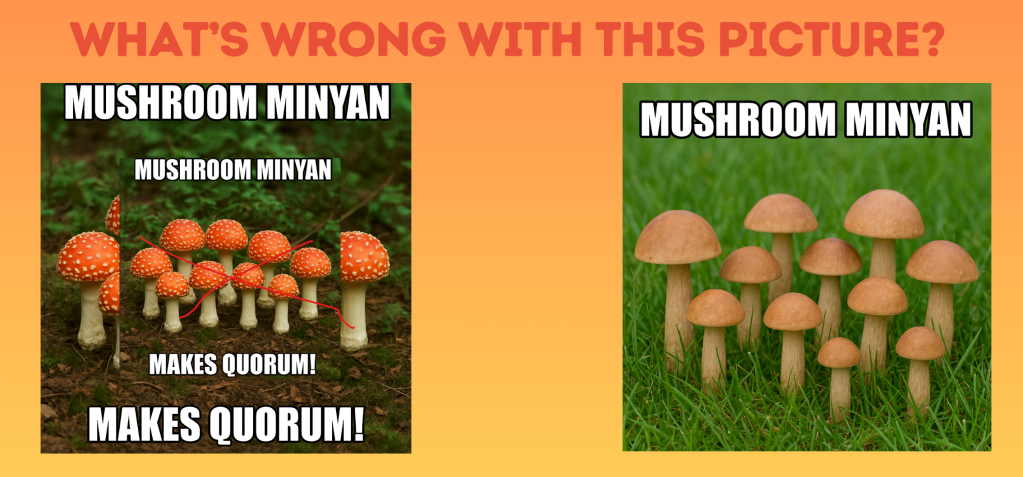
One of my favorite examples of why AI should NOT replace human judgment happened when I asked it to create a meme of a Mushroom Minyan, which came after a lady came in from outside exclaiming “there was a mushroom minyan in the yard!” which was a group of ten mushrooms in the grass. By the time I went outside to take a picture of it, it had been destroyed, and I was not able to capture that imagry.
For those unfamiliar, a minyan in Judaism requires ten or more people gathered together for prayer. So I asked AI to confidently generate an adorable image of mushrooms gathered in community… except the image it created had only nine mushrooms. And I failed to count them. The entire joke depended on there being ten! (Come on, Sara!)
Another time, I used AI to help create a song for my students and was so excited about the result that I failed to fact-check it before presenting it to them. Within minutes, the kids started raising their hands and pointing out inaccuracies.
Instead of pretending the technology was perfect, I turned it into a teachable moment. We discussed why AI gets things wrong, how important it is to verify information, and then we worked together to correct the lyrics. Ironically, the mistake became more valuable than if the song had been perfect in the first place.
AI isn’t failing when it makes mistakes—that’s expected. The failure happens when humans stop thinking critically and assume the machine is always right. The goal isn’t to let AI do our thinking for us. The goal is to become better thinkers because of how we engage with it.
Don’t even get me started on the humans that are intentionally feeding AI wrong infrormation to sabotage the results. I wish I had that kind of time on my hands!
A Tool for Human Flourishing
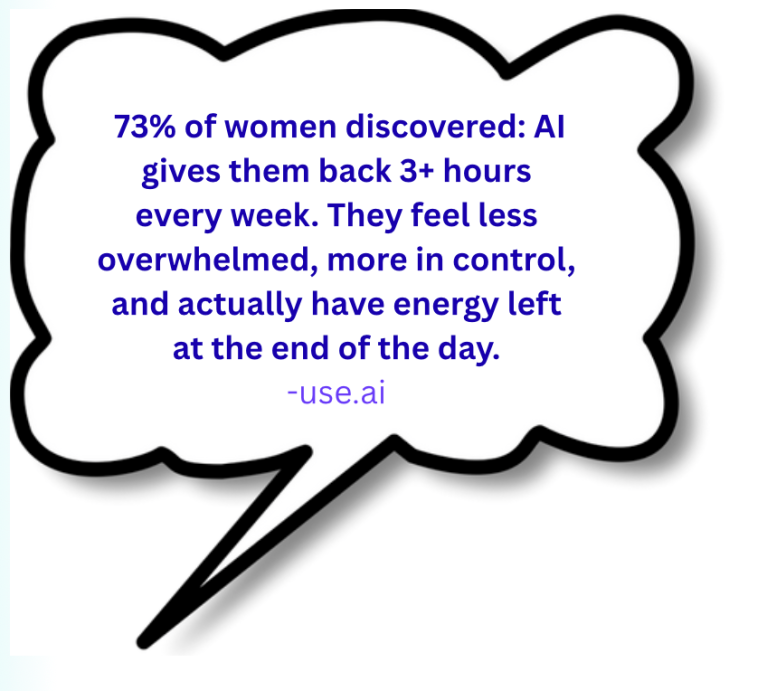
The greatest gift AI has given me isn’t productivity. It’s time. Time with family. Time with my dog. Time for self-care. Time for art. Time for ideas. Time for community. If a tool can save me hours of repetitive work and allow me to spend more energy on the people and projects I love, that feels less like a threat and more like an opportunity.
The real question isn’t: “What can AI do?” The better question is: “What can we do with the time, creativity, and possibilities it gives back to us?”
Let’s Have the Conversation
Right now there are two camps: those who If you’ve already decided AI is evil, this article probably won’t change your mind. That’s okay.
But if you’re curious…
If you’re open-minded…
If you’re interested in having a thoughtful conversation about creativity, education, ethics, productivity, and the future of human imagination… I’d love to visit your organization.
I offer engaging presentations and workshops for educators, artists, marketers, nonprofits, schools, and community organizations on how to use AI creatively, responsibly, ethically, and effectively.
No hype.
No fearmongering.
No techno-utopian nonsense.
Just an honest conversation about one of the most important tools of our generation.
The future is already here. The question is whether we’re willing to learn how to dance with it.
Rememeber: “The thinker hated the pen. The writer hated the brush.”
— MissContradiction